
WHY SPINRAZA? / LOW DOSE REGIMEN EFFICACY
Studies in patients with SMA showed SPINRAZA® (nusinersen)
Achieved meaningful results across a range of severities and age groups–from infants to adults1-4
Backed by the longest clinical trial
program to date in infants and children.5 Supported by extensive
real-
world evidence in older children, teens, and adults2-4
Click the tabs to see the data in each population






Pivotal trial: ENDEAR1,6
Study overview: A phase 3, multicenter, double-blind, randomized (2:1), sham-controlled trial of the Low Dose Regimen (12 mg loading doses/12 mg maintenance doses)
Study duration: 13 months
Participants: 121 patients with infantile-onset SMA aged ≤7 months at time of first dose
Primary outcomes measured: Survival without the need for permanent ventilation and proportion of patients meeting the criteria for motor milestone responder using HINE-2
Safety: The most common adverse reactions were lower respiratory infection (55%) and constipation (35%). Serious adverse reactions of atelectasis were more frequent in SPINRAZA-treated patients (18%) than in control patients (10%)
HINE-2, Hammersmith Infant Neurological Exam Section 2; SMA, spinal muscular atrophy.
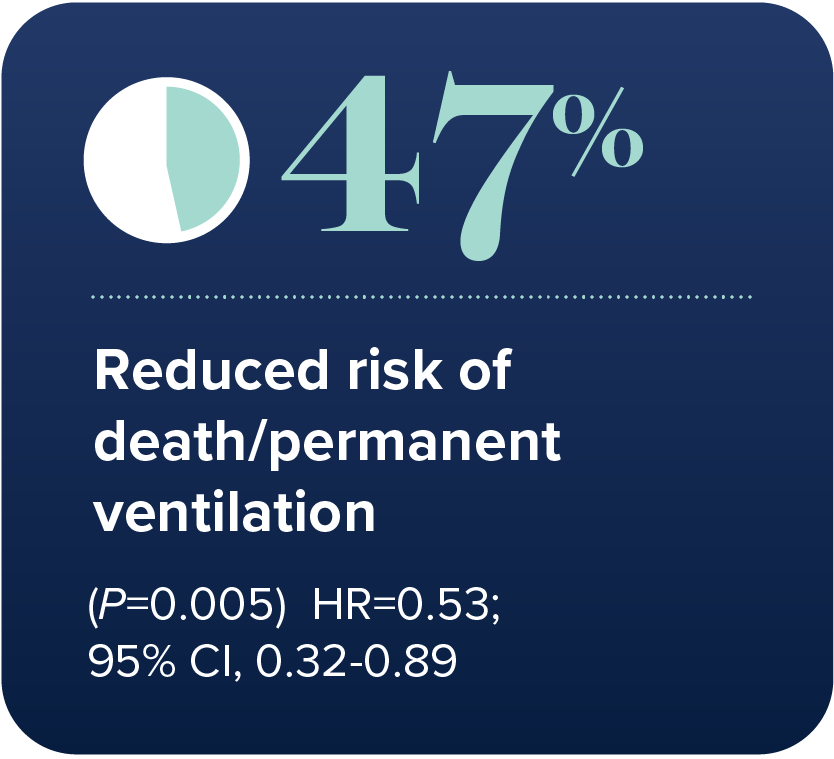
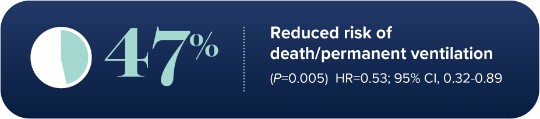
Low Dose SPINRAZA increased event-free survival compared to sham control1,6
Primary endpoint: No death or use of permanent assisted ventilation*


Learn more about the mobility measures used in the SPINRAZA clinical trials.
*Permanent ventilation was defined as tracheostomy or ventilatory support for ≥16 hours per day for >21 continuous days in the absence of an acute reversible event.
CI, confidence interval; HR, hazard ratio.
Primary endpoint:
Proportion achieving predefined motor milestone responder criteria.6
51% (37/73) of patients treated with Low Dose SPINRAZA vs 0% (0/37) of sham control patients met the motor milestone responder criteria as defined by HINE-2† at up to 13 months.1,6 Motor milestones included6:

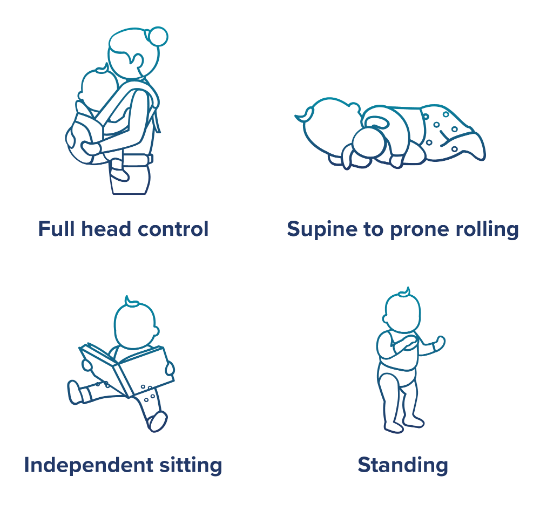
ϯA treatment responder was defined as any patient achieving an improvement in at least 1 category AND more categories with improvement than categories with worsening according to HINE-2 (excluding voluntary grasp), as assessed in patients enrolled for at least 6 months at the later of Month 6, Month 10, and Month 13 study visit. P<0.0001.1,6
Patients treated with SPINRAZA continued to improve over time, as measured at Day 394, while untreated patients saw a decline in motor milestones6
The ENDEAR trial concluded early because of the results of the interim analysis, hence why not all patients were assessed at Day 394.
Mean change in HINE-2 total motor milestone score over time


HINE-2, Hammersmith Infant Neurological Exam Section 2; SEM, standard error of the mean; SMA, spinal muscular atrophy.